
Add your cleaning company to the Welkodia directory map
Add my company ->Most cleaning businesses do not fail because they are bad at cleaning. They fail because no one knows they exist, and the ones who do cannot tell them apart from the competition. Getting more cleaning clients requires building a system.
You post a photo of a clean bathroom. You wait. Nothing happens. Or worse, a prospect messages you, you reply two hours later because you were on a job, and they have already booked someone else. You stay stuck answering messages at midnight while competitors with worse cleaning but better systems take the best jobs.
The fix is not working harder or dropping your prices. The fix is building a machine that makes your business look trustworthy, captures leads automatically, and follows up faster than anyone else in your town. The founder of Bescar Cleaning used exactly this system to scale from a few houses a week to a seven-figure business with over 80 staff members, entirely without investors or prior experience.
Quick Answer: You get more cleaning clients by combining proactive manual messaging with automated systems, rather than relying on random posting. You must build a trusted Facebook storefront, use a strict 5-post weekly rhythm, proactively message prospects with a strong offer, and automate your follow-up sequence so the first business to reply always wins.
Why should you list your cleaning business on as many directories as possible?
You should be on as many directories and local platforms as possible. Spreading your name out there helps people find you, click through to your profile, and see your services.
Do not overlook traditional listings like the Yellow Pages, Google Business Profile, or local business directories. Here is what actually happens in a prospect's mind:
Prospects might find you once on the Yellow Pages. Then life happens and they forget. A few days later, they come across your page or post on Facebook. They scroll past and forget again. Then, they browse the Welkodia cleaning map and spot your pin: "Wait, I've seen her before! And I really need cleaning right now—she is just around the corner from my house, I'll give her a call."
That is exactly how bookings happen, and that is when you get the call.
Marketing data shows it takes an average of 11 touchpoints for people to recognize your brand name, remember you, and feel confident reaching out. The more directories and platforms you appear on, the more familiar you become—and the higher your chances are of being visible and hired for the job!
Why does posting on social media feel like a waste of time?
You spend twenty minutes writing a post about your new cleaning packages. You publish it. Nobody books.
The marketing problem is usually a planning problem. The issue is awareness mismatch. You are shouting a booking offer at people who do not even realize they need a cleaner yet.
Clients go through five distinct stages of awareness before they hire you:
- 1.Unaware: They feel stressed but have not linked it to cleaning help yet. Spark awareness with emotional content.
- 2.Problem aware: They know their house is messy or their Airbnb turns over too slowly, but they do not know the fix. Educate them on why the issue exists.
- 3.Solution aware: They research options. Show your process, systems, guarantee, and stress removal.
- 4.Product aware: They know you but compare alternatives. Use proof, testimonials, and client stories.
- 5.Most aware: They are ready to buy. Give clear pricing, instant booking, and remove all friction.
If you only post promotional content to unaware people, they simply scroll past. They stop scrolling only when the content names a specific frustration they feel right now.
The AIDA framework
To convert attention into revenue, you must use the AIDA framework:
- Attention: The hook must stop the scroll by naming a specific pain. "Your cleaner is probably costing you money."
- Interest: Expand the problem so the reader cares. Cheap cleaners cost more when mistakes need fixing.
- Desire: Sell the emotional payoff, not the cleaning itself. Sell relief, time back, order, calm, and control.
- Action: Give a clear, low-pressure next step. "Message for a quote."
Good marketing is not about posting more. It is about posting with purpose. You do not need to go viral; you need to become familiar and trusted locally.
How do you build a Facebook storefront that converts?
Your Facebook page is the first trust filter before a prospect ever calls or requests a quote. Trust is built long before you ever get to meet your clients.
If the page looks small, inconsistent, or unfinished, clients assume your service quality will also be weak. They compare your cleaning business to all online brands they interact with, not just other cleaners. Restaurants, real estate agents, and beauty clinics set the presentation standard.
To look legitimate instantly, you need a clear trust checklist:
- 1.Upload a real, centered logo.
- 2.Add a professional banner stating your service, your city, and your phone number.
- 3.Make the booking link highly visible.
- 4.Pin your best reviews to the top.
- 5.Use real photos of your team, your van, or your workflow.
Outcomes beat passion claims. Say "reliability, insurance, and consistency" rather than a generic "we love cleaning."
Do not fake proof. Clients can smell fake testimonials or invented stories. A low-quality page communicates risk before you even speak, but a structured page proves you are a real business. Your Facebook page should act as your silent salesperson working around the clock.
What is the exact weekly posting rhythm for cleaners?
Random posting when you are slow does not compound trust. You need a marketing rhythm that works consistently, even during your busiest weeks. Success comes from building systems.
The more you do, the better
For social media posts, volume ALWAYS wins. Being a cleaner is actually two jobs: one is cleaning, and the other is finding clients. NEVER neglect finding new clients.
The most effective structure is a 5-post weekly rhythm that covers all stages of prospect awareness:
- 1.2 Proof posts: Screenshots of reviews, happy client stories, or genuine before-and-after photos. These build authority and concrete evidence.
- 2.1 Value post: Helpful expertise that makes your brand feel useful, not pushy.
- 3.1 Offer post: A time-sensitive deal, package, or incentive that triggers conversion.
- 4.1 Story post: Behind the scenes moments, team wins, or why you started your business. This humanizes the brand after value is shown.
You can also build leverage by doing two jobs at the same time. While you clean, wear smart recording glasses (like Meta glasses) and capture TikTok, Instagram, or Facebook videos of yourself cleaning. This means you have two possible sources of income at the same time: your hourly cleaning rate plus social media views revenue. Simultaneously, you are marketing for your next job because people will engage with your content and call you up. They have concrete proof that you do a fantastic job.
If you repeat this exact rhythm for six months, your brand becomes completely recognizable online. Familiarity compounds, and people buy from brands they see often.
How do you actually get clients with manual messaging?
While random posting does not work, proactive, strategic manual messaging does. You cannot just wait for the phone to ring.
You need to reach out directly with a clear, irresistible hook. Be proactive and call or message prospects directly. Use a simple script like this:
Hi [Name], I run a local cleaning business. Are you looking for regular cleaning? If so, I offer 50% off the first clean so I can show you how I work my magic. When is a good time to come over?
This works extremely well because it removes the risk for the client and gives you an immediate foot in the door to prove your reliability.
Why do you lose leads that message you directly?
A prospect messages you for a quote. You are currently cleaning a property, so you reply two hours later.
By the time you answer, they have already booked someone else. Speed is the new trust signal. Buying impulse decays quickly, and every hour of delay creates doubt, comparison, and forgetting. In the cleaning industry, the first business to reply almost always wins.
The second mistake is leaving leads inside social media direct messages. You do not own your followers, and casual chats are weak. You must own names, emails, and phone numbers.
You need a simple lead capture form that asks for name, phone, email, service type, and postcode. Followers do not pay your bills. Paying clients do. Every lead that you capture is a future sale because you can nurture them over time via email campaigns, newsletters, and birthday discounts.
How do you automate the follow-up process without sounding robotic?
Automation does not replace your personal touch. It replaces repetition so you can actually work on your business instead of just in it. Automation does not make you robotic; it makes you reliable.
When a lead submits your form, they should not wait for you to finish your shift. The system should trigger an instant follow-up sequence. A proven follow-up benchmark uses three automated messages:
- 1.Instant reply: A friendly confirmation thanking them and setting expectations.
- 2.24-hour message: A check-in to see if they have questions about the quote, often offering to hold a preferred slot.
- 3.3-day message: A final check-in with a specific, time-limited offer to create urgency.
In one real-world case, a Melbourne window cleaning business doubled their conversion rate within one month simply by sending an automated follow-up 24 hours after an unbooked quote.
You should also implement a missed-call text back system. If a prospect calls while you are working and you cannot answer, the system instantly texts them back to start the quote conversation. No phone lead dies while the team is cleaning.
How do you make an offer people actually book?
People do not buy when they are ready. They buy when they are motivated.
A good offer is the bridge between mild interest and actual money. It reduces decision fatigue and gives the prospect a reason to act today. It answers hidden objections like "Is it worth it?" or "Is now the right time?". You must stack value, scarcity, and simplicity.
Do not devalue your core service by begging for clients. Frame the offer as a "no brainer" reward to show them what you can do.
A highly effective strategy is offering 50% off the first clean. This shows them how you work your magic, and once they see the results, they will not refuse to keep you for more jobs. Just check beforehand that they are actually looking for a recurring cleaner; otherwise, you may just be cleaning there one time at a discount.
Strong offer examples:
- 50% off the first recurring clean.
- A free fridge or oven clean with the first booking.
- A new client starter pack with a welcome gift.
Pair the offer with a clear scarcity deadline. Saying that you only have five spots left this week forces a decision.
One Sydney cleaning business automated a message 48 hours after a quote, offering a free fridge and oven clean if the prospect booked that week. Their booking rate jumped by 27 percent in two weeks, entirely without ad spend or extra hires. Timing itself is marketing.
How do you get more visibility with property managers?
Property managers and short-term rental hosts are highly valuable clients because they need recurring, reliable cleans.
They also look for proof before they hire. "Why should I go with you and not the other cleaner in my town?" You must stand out by being uniquely visible where they are actually looking. Social media is often just a secondary check; they actively search dedicated directories first.
You should register your cleaning service on the official Welkodia cleaning providers map directory. Property managers actively use this directory to discover and compare local cleaners.
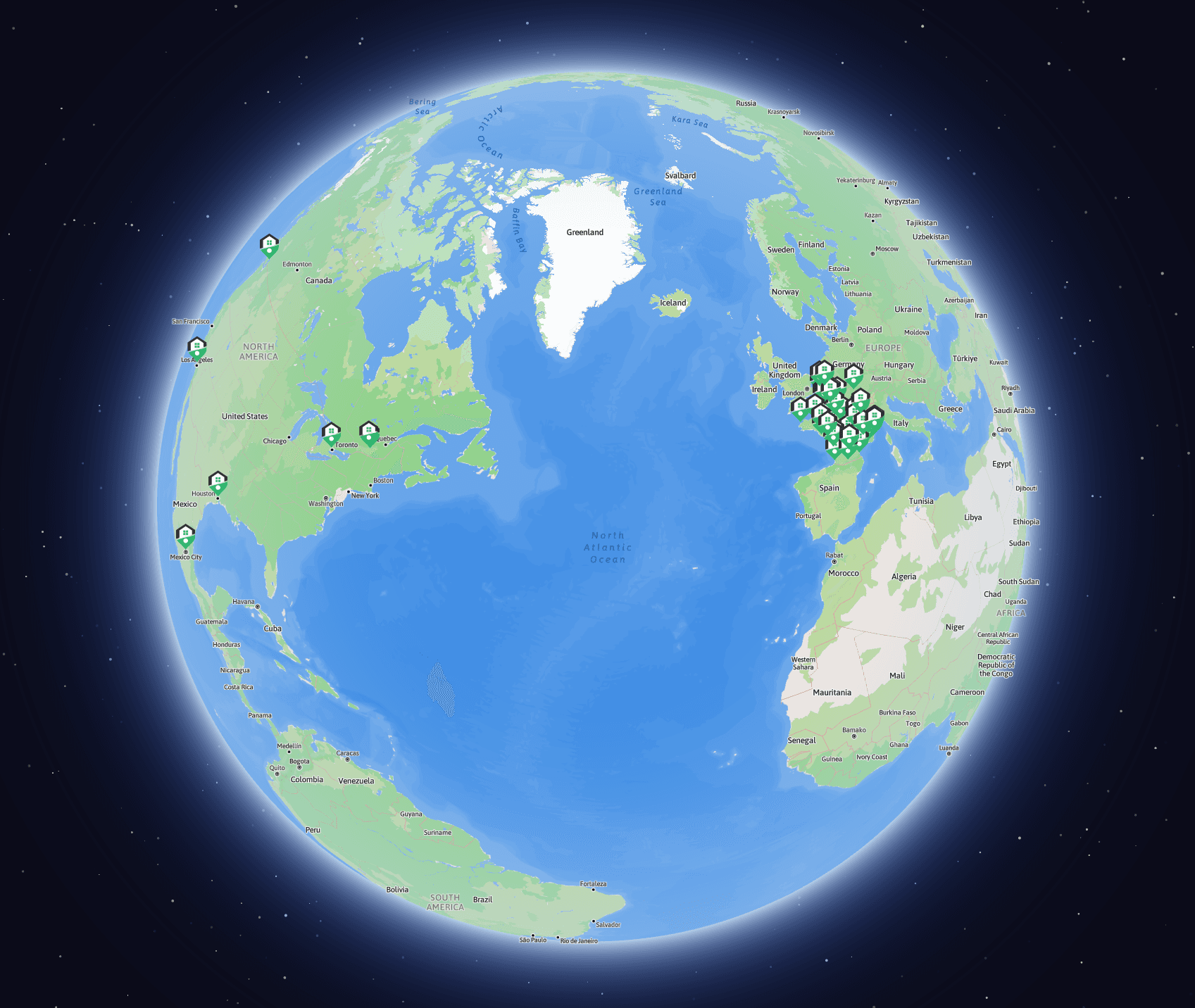
Find reliable cleaning professionals in your area
Use our interactive map to discover and connect with local Airbnb cleaners who understand the specific needs of short-term rentals.
It is not a magic pill, but being listed creates steady visibility over time across the internet. When hosts compare options, seeing your structured profile on a dedicated hospitality platform adds another layer of trust.
You can then apply your automation principles here too. After completing your first clean for a new property manager, send an automated review request. Two weeks later, automate a message offering your next available opening. This turns one booking into a predictable, repeating client.
Mental model -> Speed builds trust, structure beats charm, and the business that captures the lead data controls the growth.