

Create your digital guidebook with upsell store
Create my guidebook ->When an Airbnb turnover fails, it is rarely because the cleaner is slow. It is usually because the pricing model forces them to absorb the cost of a bad guest.
Beds, bathrooms, laundry, hot tubs, guest mess, and owner extras cannot be priced under one vague flat rate. The only way to scale a turnover operation without losing quality is to build a hybrid pay structure.
Here is how to price standard turnovers, protect your margins, and keep your best property manager teams.
Quick Answer: Pay Airbnb cleaners with a hybrid structure: a clear base turnover rate for repeatable work, hourly pricing for unknowns, and separate charges for scope-breaking extras. That keeps cleaners from absorbing bad-guest costs and helps the business price turnovers based on real reset complexity.
The unpriced variability problem
You quote a flat rate for a 3-bedroom property.
But a 3-bedroom property with three beds is not the same as a 3-bedroom property with seven beds, a sofa bed, a bunk bed, and backup linens. The real unit of work is not the bedroom. It is the reset complexity.
When you pay a flat rate without a written scope of work, you are asking the cleaner to absorb the risk of a bad guest. If an owner asks the cleaner to restock firewood, check the hot tub, or photograph inventory, that flat rate quickly becomes hidden wage compression.
Hourly pay feels fairer, but without task standards, it makes costs unpredictable for the business. You cannot scale an operation if you do not know what a turnover will cost before it happens.
An Airbnb turnover is five jobs, not one
Most pay problems happen because the business prices only the cleaning, and silently expects the cleaner to absorb the rest.
An STR turnover is actually five jobs packed into one deadline:
- 1.Cleaning: the standard scrubbing and wiping.
- 2.Laundry: the actual bottleneck of most turnovers.
- 3.Inspection: spotting damages and reporting them.
- 4.Restocking: tracking and refilling supplies.
- 5.Presentation: staging the property for the next guest.
If you treat laundry as "included" when it is the actual time bottleneck, the flat rate will fail. If the cleaner has to take laundry offsite, the pay must reflect transport time, machines, and return logistics.
Common trap
Repeated "small" tasks become a new scope of work. They should trigger a new client price and a cleaner pay adjustment. Scope creep is unpaid labor with polite wording.
How to structure a hybrid pay model
The best system protects both sides. The cleaners know what is included, and the business knows when extra work becomes billable.
The hybrid pricing rules
Start with a base turnover rate, but always attach it to a clear extra-task menu and an hourly floor.
- Pay hourly for unknowns: Use hourly pay for first cleans, deep cleans, post-renovation cleans, and unknown properties.
- Pay per job for repeatables: Use a flat rate only after the property has been timed across several normal turnovers.
- Use an effective hourly floor: After the cleaner finishes the job, the flat rate should still translate into a fair hourly amount.
- Reprice early: Review the property pricing after the first 3 to 5 cleans if the original estimate was wrong.
Separate cleaner pay from client price
The guest cleaning fee is not the same thing as cleaner pay.
The client-facing price must also cover your business overhead: scheduling, quality control, insurance, payment fees, travel time, and profit.
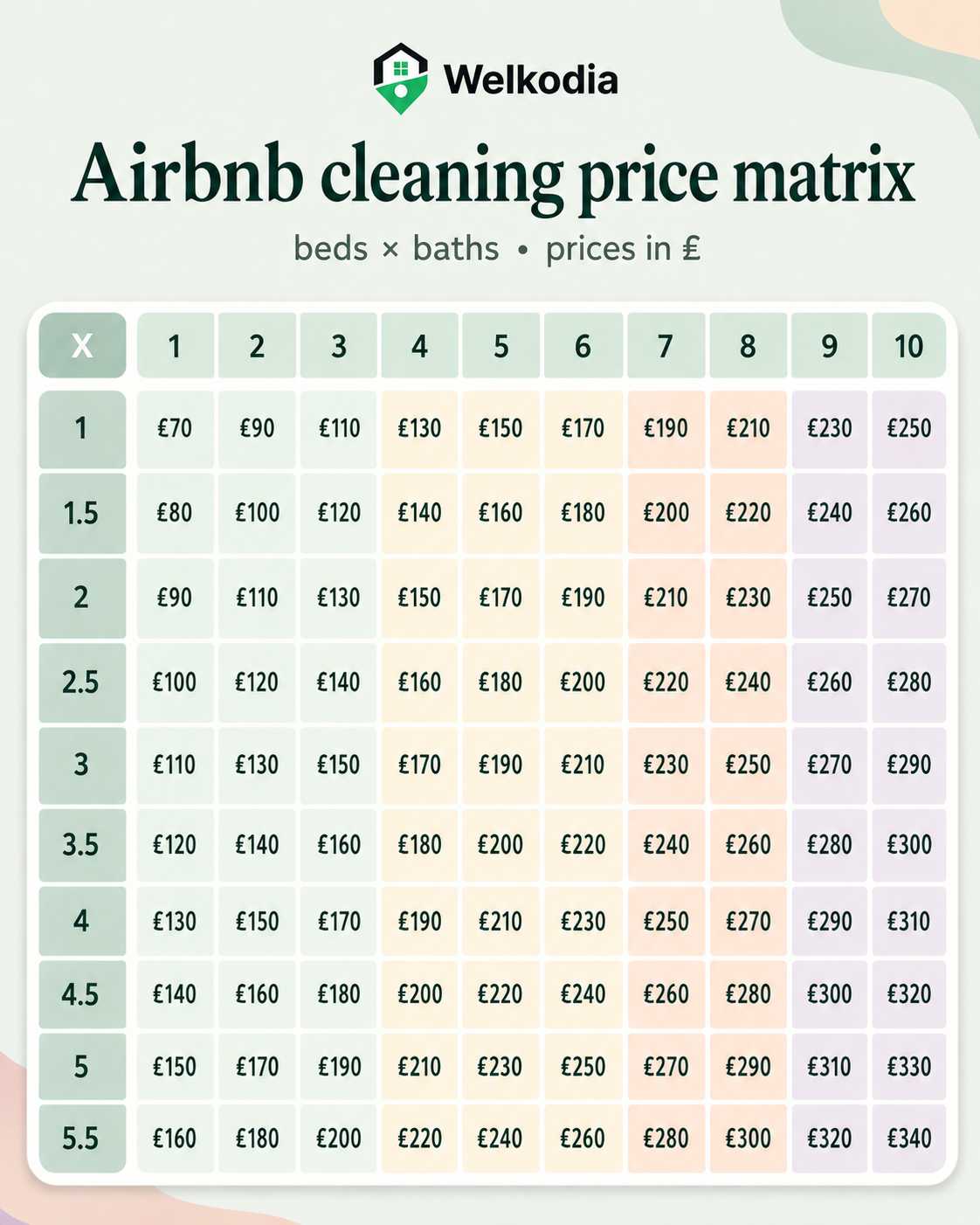
Do not copy a beds-and-baths pricing chart blindly. Use it as a conversation starter, but adapt it to local wages, the condition of the property, and the specific scope of work expected by the owner.
Price the exceptions
If the owner adds work, the rate should change before resentment does. Good cleaners do not leave because one job was hard. They leave when hard jobs are priced like easy ones.
Use separate line items for tasks that break the standard scope.
| Extra task | Why it changes the price | How to charge |
|---|---|---|
| Hot tub care | Adds chemical risk and safety checks | Fixed add-on per turnover |
| Pet hair removal | Requires extra vacuuming and odor checks | Fixed pet fee per stay |
| Excessive trash | Demands offsite disposal or extra trips | Variable hourly extra |
| Offsite laundry | Adds transit time and machine costs | Fixed per-load or transport fee |
Find reliable cleaners who understand your needs
If you are struggling to find cleaners who accept a hybrid pay model or who understand the standards of short-term rental turnovers, you are not alone. Most residential cleaners are not equipped for the speed and detail required by Airbnb operations.
This is exactly why the Cleaning Map exists. Instead of guessing or posting on local Facebook groups, you can connect directly with local professionals who specialize in vacation rentals.
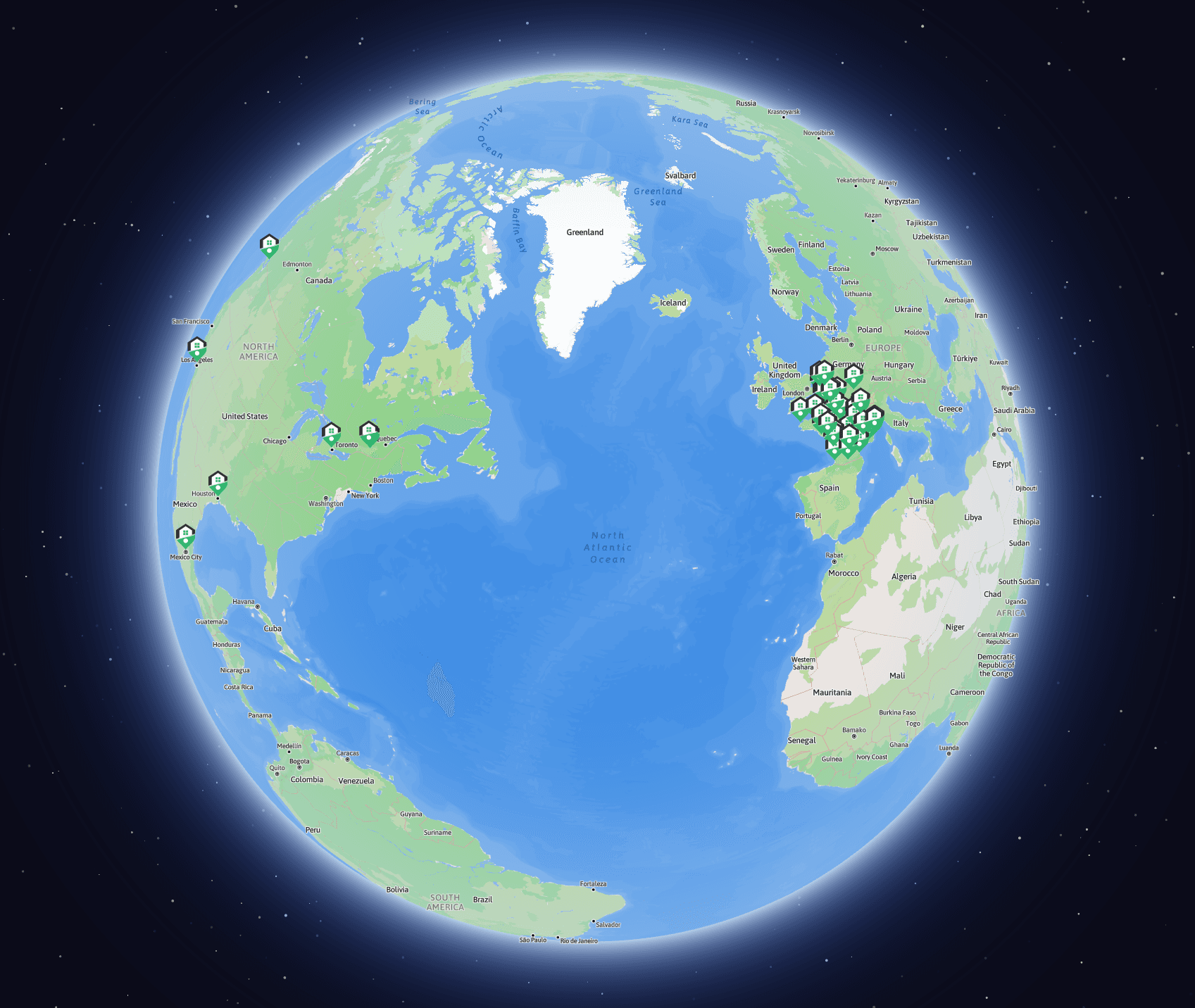
Find reliable cleaning professionals in your area
Use our interactive map to discover and connect with local Airbnb cleaners who understand the specific needs of short-term rentals.
Stop paying for hope
Pay the cleaner for the work you actually expect, not the work you hoped the guest would make easier.
A flat rate is only fair when the job is actually flat. Build a clear scope, price the exceptions, and make sure your guest instructions support the team on the ground.
Mental model -> Every unpriced extra task is a silent pay cut for your cleaner.
FAQ
Why does one flat rate often break down?
Because properties with the same bedroom count can still have very different reset complexity, laundry load, and owner expectations.
What are the five jobs inside one Airbnb turnover?
Cleaning, laundry, inspection, restocking, and presentation.
When should hourly pay be used?
For unknowns like first cleans, deep cleans, post-renovation cleans, and properties that have not yet been timed accurately.
When is pay-per-job a better fit?
After several normal turnovers have established a repeatable scope and duration for that property.
Why separate cleaner pay from the client cleaning price?
Because the client price also has to cover business overhead like scheduling, quality control, travel, insurance, payment fees, and profit.
What should trigger a new price?
Any repeated extra task outside the standard scope, such as hot tub care, pet hair removal, offsite laundry, or excessive trash handling.