
Create your digital guidebook with upsell store
Create my guidebook ->Direct repeat bookings are captured by providing returning guests with a direct booking option inside their digital guidebook, allowing them to bypass OTA platforms like Airbnb or Booking.com. This setup eliminates booking fees for both the host and the guest while keeping calendars synced and reservation approvals fully controlled.
Offering this return path is not about becoming a direct-booking expert. It is about stopping the loss of future stays simply because the guest did not know how to reach you directly.
Quick Answer: Guests will not remember your property name or save your phone number six months later. To get direct repeat bookings, put a large "Book Your Next Stay" button inside the digital guidebook they use while at the property, linking directly to your booking engine.
A guest who loved the place is not a stranger. They already know the space, found the Wi-Fi, explored the neighborhood, chatted with you or your team, and felt at home. Returning through a booking platform is usually just a default habit when they lack a clear, direct return path.
That is why rebooking is less a big "loyalty strategy" and more a simple gesture: when a guest thinks "I would love to come back," they should immediately see how to do it.
The real problem is not loyalty. It is platform habit
Many hosts assume that if a guest loved the stay, they will naturally think to come back directly.
In reality, a guest can love your place and still open Airbnb or Booking. Not because they forgot you. Because that is the easiest reflex when it is time to book.
So the problem is not willingness. The problem is the missing return path.
A guest can want to return and still drift elsewhere if you do not show them the way back.
To break that habit, you need a familiar, reassuring place that is easy to reopen. That is where guest rebooking becomes useful: it starts from the guidebook the guest already used during the stay.
Good rebooking should feel reassuring, not like a form
Past guests do not want to fill in a complicated request. They want to feel that coming back will be as easy as the first stay.
They need to understand three things quickly:
- yes, they can ask for a future stay easily
- yes, you still approve or decline the request
- yes, dates and payment will be handled properly
The feeling matters as much as the mechanics. If the path feels improvised, they will go back to the platform. If it feels like a warm, clear invitation, they may stay with you.
A WhatsApp message is not always enough
Messages like "We would love to come back in August, is it available?" are great news. But if everything happens manually afterward, the magic disappears quickly:
- 1.you check the dates
- 2.you find the right price
- 3.you explain the terms
- 4.you organize payment
- 5.you confirm by message
- 6.you remember to block the calendar
You did not build a channel. You built one more conversation.
Good rebooking removes that heaviness. The guest knows where to ask. You receive a clear request. You accept or decline. The next stay does not depend on memory, an old text thread, or a business card left on a counter.
Why the guidebook is the best return point
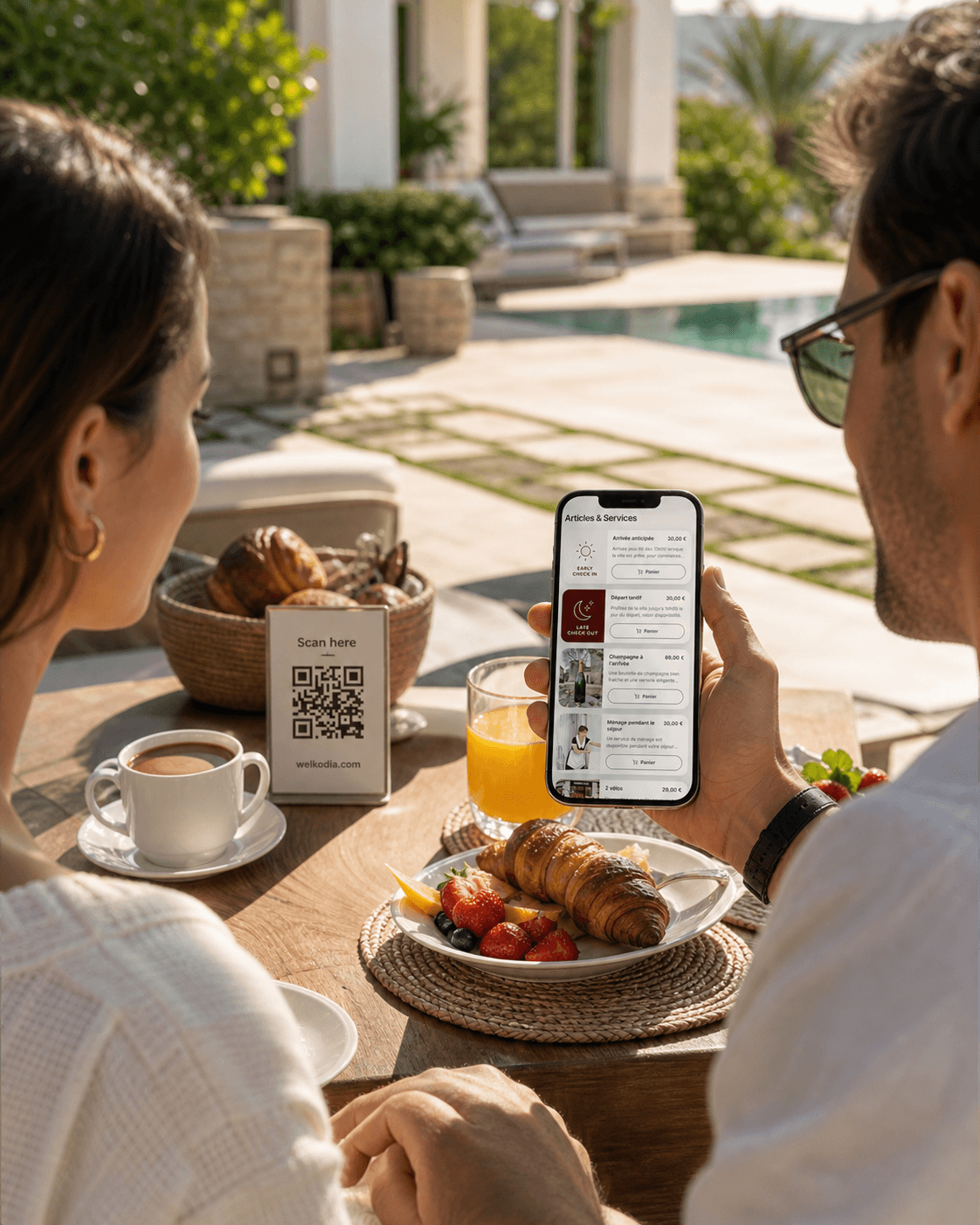
The best time to secure a future stay is not always after checkout. It is often during the stay, when the guest is already settled, reassured, and using the guidebook for Wi-Fi, arrival details, local recommendations, or checkout instructions.
Take a couple staying in Annecy for a weekend. They open the guidebook for parking, restaurants, and departure info. If a clear "Book your next stay" option appears inside that same environment, coming back becomes an immediate action instead of a vague intention.
The best moment is not always after departure
The guest does not need a long marketing funnel to come back. They mostly need a stable path at the exact moment they already trust the property.
If you already make the guidebook visible inside the property, the guide on how to use QR codes in an Airbnb to drive real guest actions pairs naturally with this logic.
The same logic also matters if you are still comparing formats. If your main support is hard to reopen on mobile, the article on digital guidebook vs guest app vs PDF explains why the medium matters as much as the message.
What the guest needs to feel
If you want a guest to book again without 12 messages, they need to feel three things:
- 1."I know exactly where to ask."
- 2."This does not feel like a strange side arrangement."
- 3."The host is still in control, so the answer will be serious."
The key issue is trust. The button should not say "direct booking" like a concept. It should say something simple, almost human: "Book your next stay."
For a property manager team, this visibility also becomes proof. You are no longer saying "we try to get more direct bookings." You are showing owners that happy guests have a real door back in.
The message should feel like an invitation
Your guest message should not sound like a lesson about platform fees. It should simply make the guest feel welcome to return.
Do not say: "Book direct to avoid platform fees."
That speaks to your margin, not to the guest's emotion.
Say instead: "If you enjoyed your stay, you can come back more easily next time."
That tone changes everything. The guest does not feel pushed away from a platform. They feel invited back to a place they already know.
What property manager teams gain beyond margin
For an individual host, the main upside is usually protected margin.
For a property manager team, the upside is wider:
- proving to owners that they are building an asset beyond the OTAs
- reducing manual back-and-forth on repeat-guest requests
- keeping calendar control and approval logic instead of improvising in chat threads
- showing a stronger level of professionalism than a business card left in the property
So rebooking is not only a commission topic. It is also about owner retention, operating process, and commercial credibility.
Final takeaway
Rebooking is not a magical extra feature. It is a way to recover part of the value that OTAs keep capturing from guests who are already convinced.
Airbnb and Booking still matter for filling the calendar. But when a guest already liked the property, the real challenge is not sending them back into the same acquisition cost by default.
A satisfied guest is not enough. They still need an obvious path to book again.
Mental model -> A satisfied guest is not a direct booking channel until they have an obvious, reusable path to return.
We would love to host you again if you come back to the area.
You can request your next stay directly from the guidebook here: [Link]
Turn satisfied guests into direct repeat bookings
Let past guests request their next stay from the guidebook, keep approval control, sync calendars, and avoid paying OTA-style fees again.
FAQ
Why do happy guests still return through Airbnb or Booking?
The article says it is usually platform habit, not a lack of loyalty. Guests often go back to the easiest booking reflex they know.
What should a good rebooking flow make clear?
Guests should quickly understand that they can request a stay easily, that the host still approves it, and that dates and payment will be handled properly.
Why is a WhatsApp conversation not enough?
Because it keeps the whole process manual. You may still need to check dates, price the stay, organize payment, and block the calendar by hand.
Why is the guidebook the best return point?
It is already a trusted place the guest used during the stay, so adding a return path there feels familiar and easy to reopen.
What is the best tone for rebooking messaging?
An invitation, not a lecture about OTA fees. The article recommends making the guest feel welcome to return rather than pushed away from a platform.
What do property manager teams gain beyond margin?
They also gain clearer process, stronger owner credibility, and less manual back-and-forth on repeat-guest requests.